The Signal
A couple of weeks ago, two of the loudest voices in SaaS said the quiet part out loud, in the same week, on the same platform. And on the surface, it sounded like they were flying into the future with confidence and control:
First, Marc Benioff announced Salesforce Headless 360. The pitch: No browser required. Our API is the UI. The entire Salesforce, Agentforce, and Slack stack now exposed as APIs, MCP, and CLI, so AI agents can hit the data and the workflows directly, without a human ever clicking a button in a Salesforce screen.
Then Kenneth Auchenberg replied with a small confession: “We were a bit too early with that Stripe CLI. My first ship at Stripe.”
Two of the largest SaaS players, in public, conceding the same thing: the human-facing UI is no longer where the value is. The agent-facing surface is. Salesforce framed it as strategy. Stripe framed it as vindication.
Both are right about the trajectory. Both are also missing, or politely sidestepping, what that trajectory actually means for most of the software industry. The truth is, they are not flying with confidence or control. They have simply had to adapt to a new reality, and that reality puts some of their key value propositions at stake.
A Test For Software
Here is the test I keep coming back to.
There are three kinds of software in the world.
In the first kind, the doing is the point. Nobody asks AI to play Civilization for them just to come back five hours later to confirm they won the game. Nobody asks AI to browse a holiday site, look at the pictures, imagine the summer, and simply book whatever feels statistically optimal. The whole reason these things exist is the experience of doing them. Outsource that and you have outsourced the value.
The second kind, and this is most business software built over the last twenty years, is a means to an end. I do not need a world-class UX for my annual closing if I can get it done faster without one. I do not enjoy doing my MOMS (Danish VAT) reconciliation, although I am sure someone does. I do not want a beautifully designed expense report if I can just get the factual answer. I want the closing filed, the VAT reconciled, the expenses settled. The faster and the more invisibly that happens, the better the software did its job. The amazing UI/UX was built, and it succeeded by making the journey bearable.
The third kind is gatekeeper software sitting on infrastructure that is genuinely hard for others to access. Banking rails. Telco infrastructure. Tax filing channels. Regulated, permissioned, or deeply embedded systems where the value is not the UI, but the scarce right to touch the underlying network.
Experience software survives because the user wants to be there. Infrastructure software survives because the world still has to pass through it. Means-to-an-end software is the one standing in the road.
The second category is now highly exposed by AI. That is the whole story. The line was always there, AI just made it load-bearing.
Last Week, In Practice
Annual report season. My accountant pinged me with the usual line: “Time for the annual reports, want me to help you again?”.
And for the first time in years, I thought: not this time. Let’s see what happens if I let Claude do it.
Claude opened a browser. Logged into a state-of-the-art Danish accounting and bookkeeping product. Pulled the year’s transactions. Read my previous annual reports to see how I had structured them in the past, so the new one would line up. Logged into Skat, the Danish tax authority, to verify the moving parts. Checked that MOMS, Danish VAT, had been cleared as it should have been. Found a small reconciliation issue in the process. Fixed it.
That product has a lovely UI, for accounting software. Its UX team has clearly worked hard. I used none of it. I did not click a button. I did not read a tooltip. I did not sit in front of a dashboard wondering what to do next. The whole point of accounting software, for me, in that moment, was to not be in the accounting software.
And here is the part that should keep every SaaS leadership team up at night: the experience was better. Not faster, better. Fewer mistakes. More thorough. Cross-checked against last year automatically. Caught an issue a tired human (me) would have missed.
I made the same broader argument from the economic side in The Price of Software Just Hit Zero. This is the lived version of it.
If you want the extreme version of where this leads, look at Rentemester, an open-source Danish bookkeeping system being built agent-first from the ground up. The architecture says it out loud: the agent does the work, hard rules decide what is allowed, the append-only ledger enforces it, the documents are the evidence. A human only handles the exceptions the rules refuse to guess at. Notice what is conspicuously absent from the build-it-yourself list: a user interface. It sits under “not built yet,” described as an optional “control room,” because the primary surface is an agent-facing API, not a dashboard. That is the whole thesis of this post, turned into a repository. Start a product today and the UI is no longer the point. The rules, the ledger, and the agent surface are. (It is also a textbook case of enforcing quality instead of prompting for it: the agent may act, but the ledger is the law.)
The Comforting Lie
Every SaaS leadership team is currently telling itself the same story to get through the quarter. It goes like this:
“The UI was always a layer on top of the data. We will pivot from app to platform, from UX to data backbone. We become the system of record. The agents come to us.”
It sounds like strategy. It sounds like clever future-proofing. It sounds like the kind of thing you put in a board deck. It is mostly cope. And for a lot of software, that should not be controversial. A lot of software needs to die.
Not the companies necessarily. Not the people. But the destination. The workflow theatre. The product you visit only because some process trapped you there. If AI can make that disappear, good. That was never sacred ground. It was tax.
“We will become the data layer” is not a pivot. It is the thing the company alreadywas, dressed up in fresh language, with the part that used to justify the price tag, the UI, quietly removed from the slide.
Table Stakes Is Not Strategy
There is a real version of the gatekeeper argument. If you own a permissioned rail, a regulated filing channel, a banking connection, a telco network, or some other piece of infrastructure the world cannot easily route around, agents still need you.
But a CLI, an MCP endpoint, or a headless API does not by itself create that position. It is simply how software has to be reachable now. Stripe’s CLI was useful. Salesforce Headless 360 may be necessary. Neither magically turns ordinary means-to-an-end SaaS into banking rails or telco infrastructure. It only removes the last excuse for keeping humans in the UI.
For most SaaS companies from the last twenty years, the uncomfortable read is simpler. They did not earn the right to be the data layer through value creation. They happened to own the form fields where the user typed the data in. The customer records, the support tickets, the booking histories, the contract approvals, the user generated all of that by sitting in front of a UI that has now lost its reason to exist.
If that gate sits on hard infrastructure, it may be durable. If it sits on data the customer would happily migrate away from if migration were easy, it is rent with a timer on it.
Where The Big Labs Are Pointing
This is also why the OpenAI and Anthropic race is not about lock-in through the LLMs. Models still matter, obviously. But models are becoming more interchangeable than the place where the work happens.
OpenAI’s Codex for almost everything is a bet that the AI workspace expands across the tools and apps where work already happens. Anthropic’sClaude Cowork points in the same direction: hand off the work, let the AI move across files, apps, and connectors, and come back to reports, spreadsheets, dashboards, and decisions instead of another SaaS screen.
The model is what you came for. The universal interface you get used to is what might keep you around. Not because it has a prettier static UI than your CRM, accounting system, or reporting tool, but because it can generate the right UI at the moment the work appears.
That is the real threat to database software. The annual report, the sales dashboard, the customer follow-up, the expense reconciliation, they stop being pages you open in separate products. They become temporary interfaces generated where the user already lives. The old SaaS app becomes one of the databases plugged into the new surface.
What Actually Survives
The survivors are not simply the products with the nicest UX. They are the products where the UX is the value, the infrastructure that agents still have to pass through, or the universal interfaces where the user chooses to live.
Games. Creative tools where the act of making is the point. Social experiences where presence with other humans is the product. Instruments. Cameras. Sketchpads. Banking rails. Telco networks. Regulated systems with real-world permission attached.
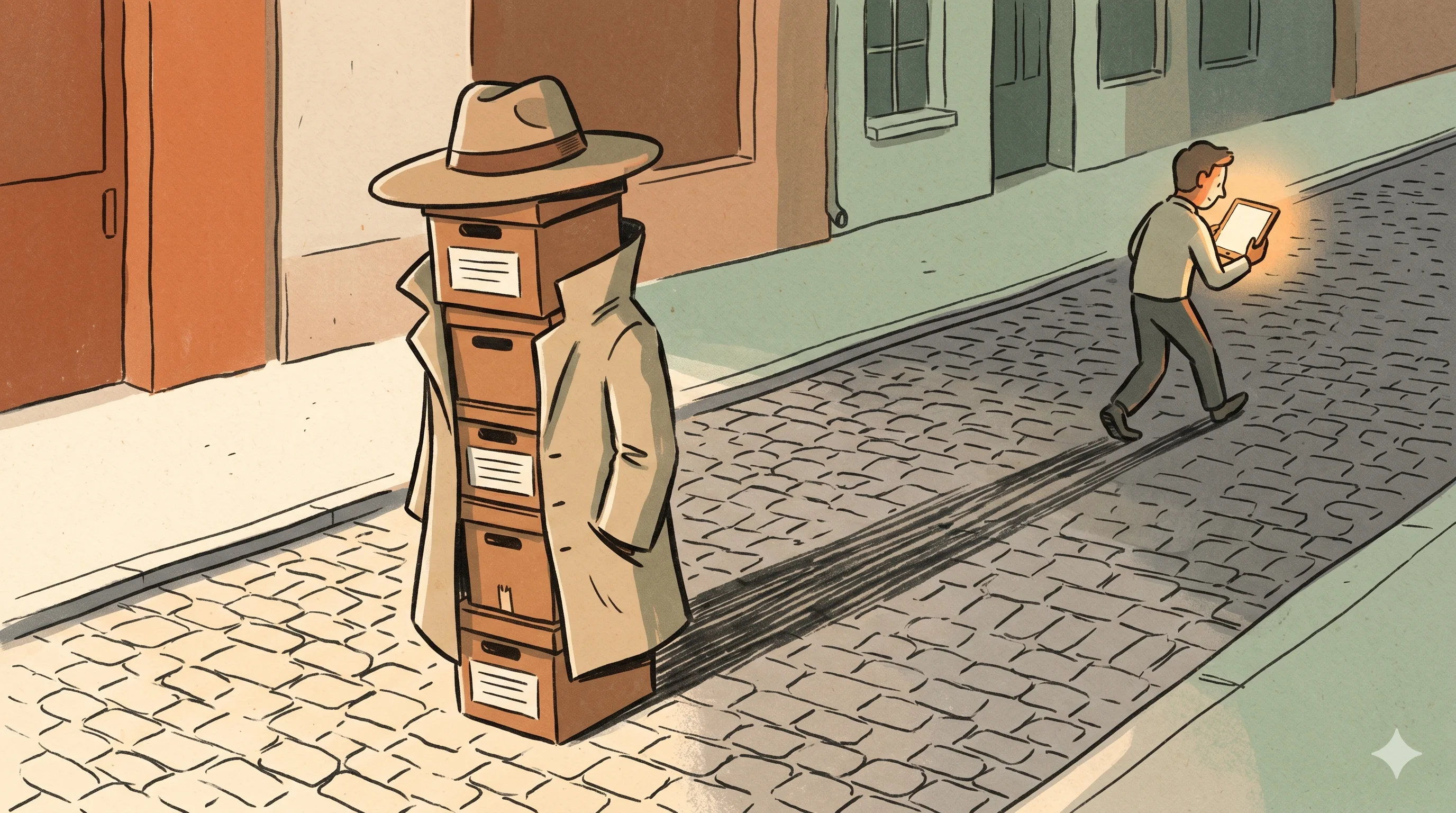
Everything else is, eventually, a database in a trenchcoat. It will keep collecting a subscription for as long as it controls the access. It will not be where the value lives. The value will live wherever the AI agent decides to stand, and the agent stands wherever the job actually gets done.
The Implication
For founders, operators, and investors of the second category, the means-to-an-end software that quietly powered the last twenty years of SaaS, the question is not should we build a CLI. Of course you should. Everyone will.
The harder question is what you actually are when the CLI ships and the UI fades.
- If the answer is “a database the customer would happily migrate away from if it were easy,” you are running out the clock.
- If the answer is “permissioned infrastructure others cannot easily reach,” you may have a defensible position. But be honest that the moat is access, not UX.
- If the answer is “a place where, even with infinite AI capacity, the customer still wants to spend their time,” or the universal interface where the work starts, you are fine.
- If the answer is “we are not sure,” run the brutal test: make your best users spend a quarter using your product only through their AI agent. If they miss the UI, you have something. If they do not, you have a database with switching costs.
I argued the labour version of this in They Don’t Feel It. Yet, and the foundational version in Still True. This essay is the structural one. The same wave, viewed from the other side of the office.
Benioff and Auchenberg are not wrong. The UI is becoming optional. The agent is becoming the user. The CLI is becoming table stakes. But pretending that the company on the other end of that CLI is still creating the same kind of value it used to, just through a different door, is, at best, a misconception and, at worst, the cope of the decade.
Most SaaS, for the next few years, is going to be a database in a trenchcoat, hoping you do not look too closely while it tries to survive.
I would look closely.