What Happened Next
The other day we had a Town Hall in Product & Engineering. A pretty special one. It was the one where we drew the line in the sand, said out loud what many of us had been feeling for a while: the old rules of how we build software don't apply anymore. Not because they were wrong. Because the world moved.
And something happened afterwards. On Slack, in standups, in the way people talked about AI. Developers who'd been quiet started asking questions, real ones, not the kind designed to poke holes. People shared experiments. Small wins. Things that didn't work. It felt safe to say so, which was new.
It wasn't magic. It was just honesty. And I think the ceremony we did at the end had something to do with it.
The Ceremony
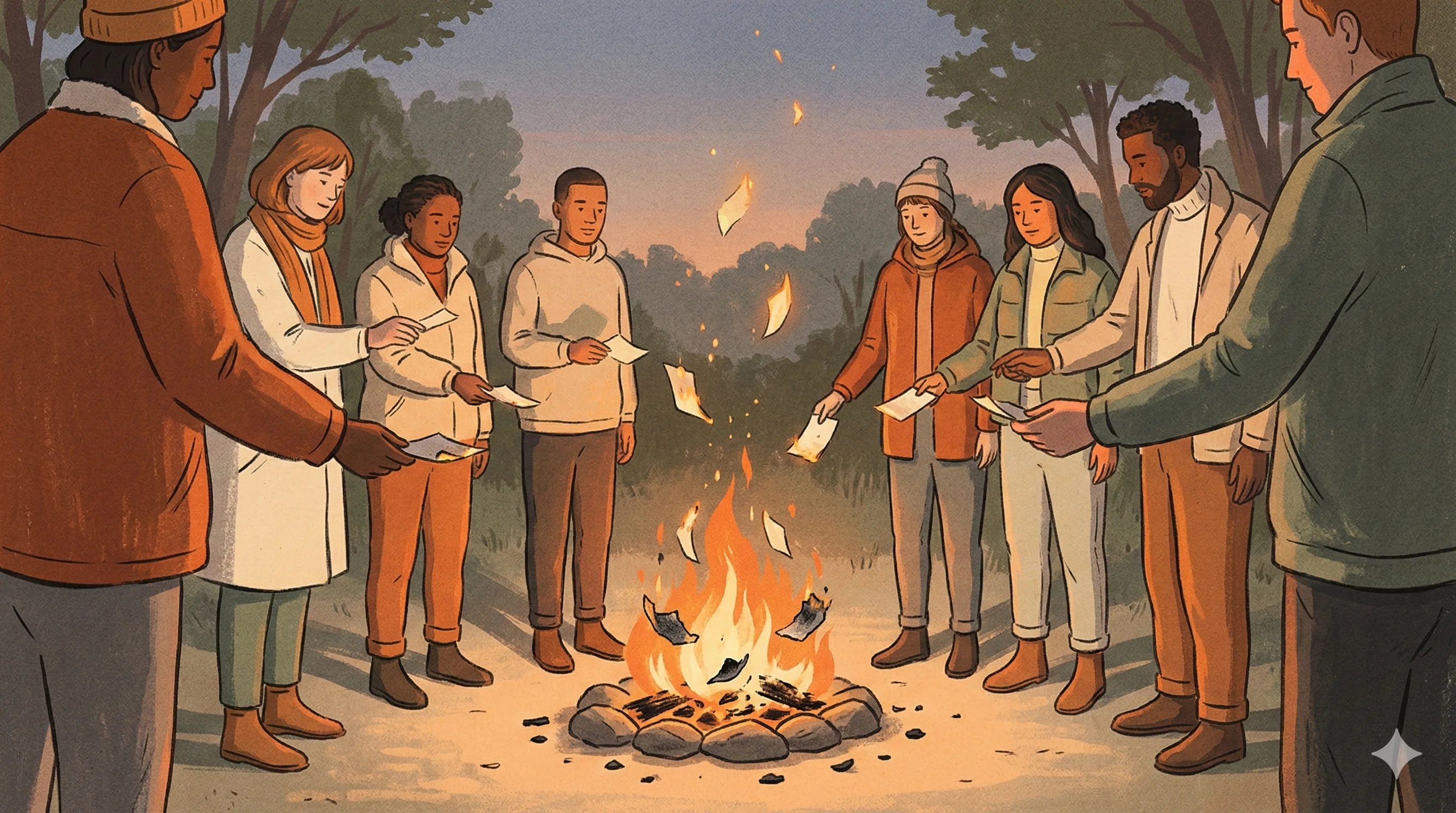
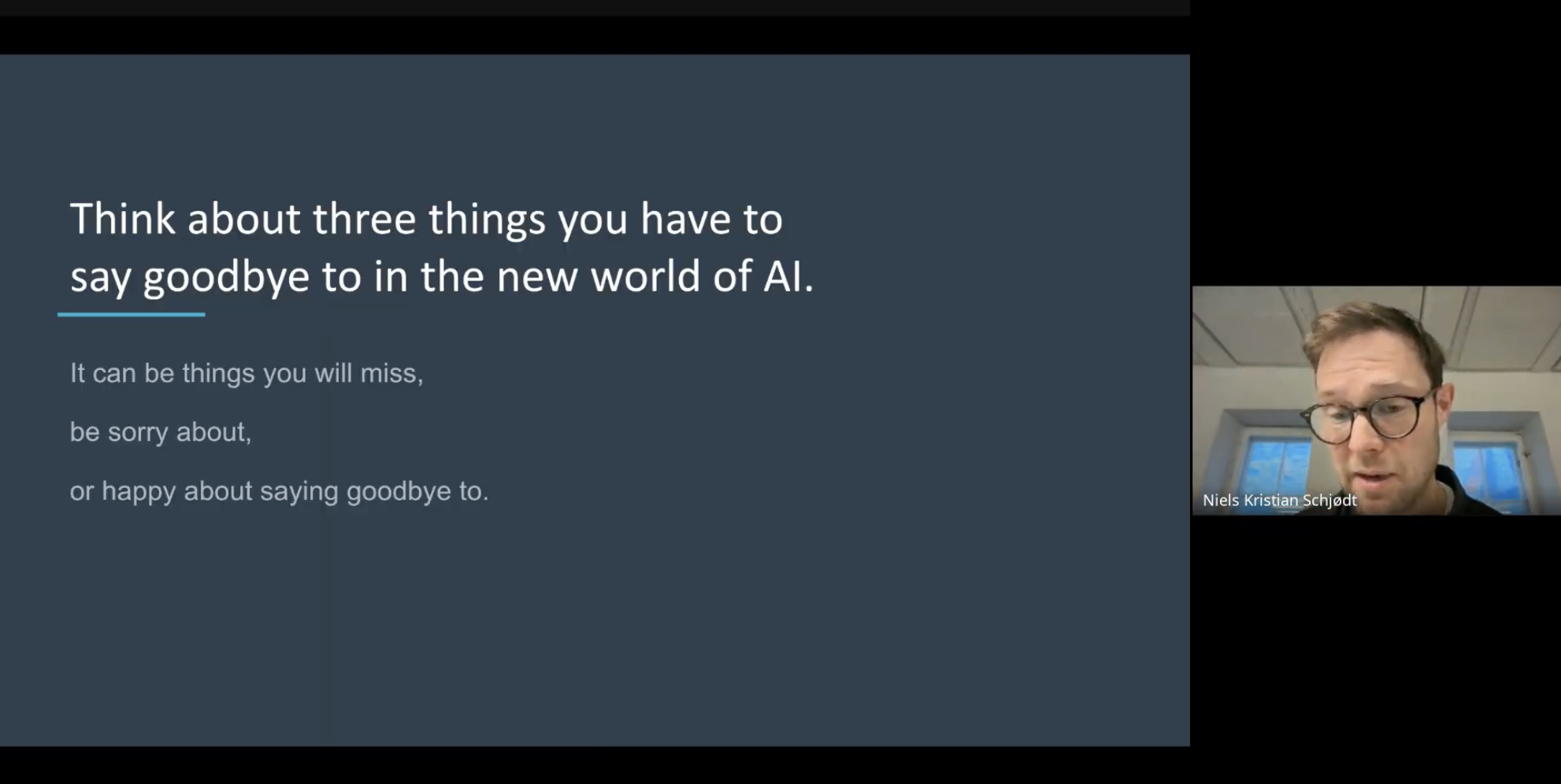
The Town Hall ended with a ritual. A ceremony borrowed from something older than management, the simple human tradition of saying goodbye to things that served you and welcoming what comes next. The prompt was simple: think about three things you need to say goodbye to in this new world of AI. Things you'll miss. Things you're sorry about. Things you're happy to leave behind.
People wrote. In real time. Names, descriptions, feelings. One engineer wrote goodbye to code reviews. Another wrote goodbye to being the expert in the room. Someone wrote goodbye to the comfort of knowing exactly what their job was supposed to look like. A senior architect wrote: "To the elegance I can't measure anymore."
And they watched each other do it. That's the part that mattered most. In a remote, distributed team spread across time zones, people saw each other admit together that something is ending. That shared vulnerability, that's what made the ritual real. Not the slides. Not the arguments. The moment where a room full of accomplished professionals looked at the same fire and said goodbye together.
Built in 30 Minutes
30 minutes before the presentation went live, I had an idea. We were going to do the ceremony, that much was planned. But we're a remote team. International. Eight time zones. The original plan was a Google Form, maybe dropping stickies on a Figma board. Respectful. Fine. A bit.. flat.
So I thought: why not eat my own dog food? I talk about the cost of software hitting zero, about building what you need in the moment you need it. Here was the moment. I opened Lovable and started building.
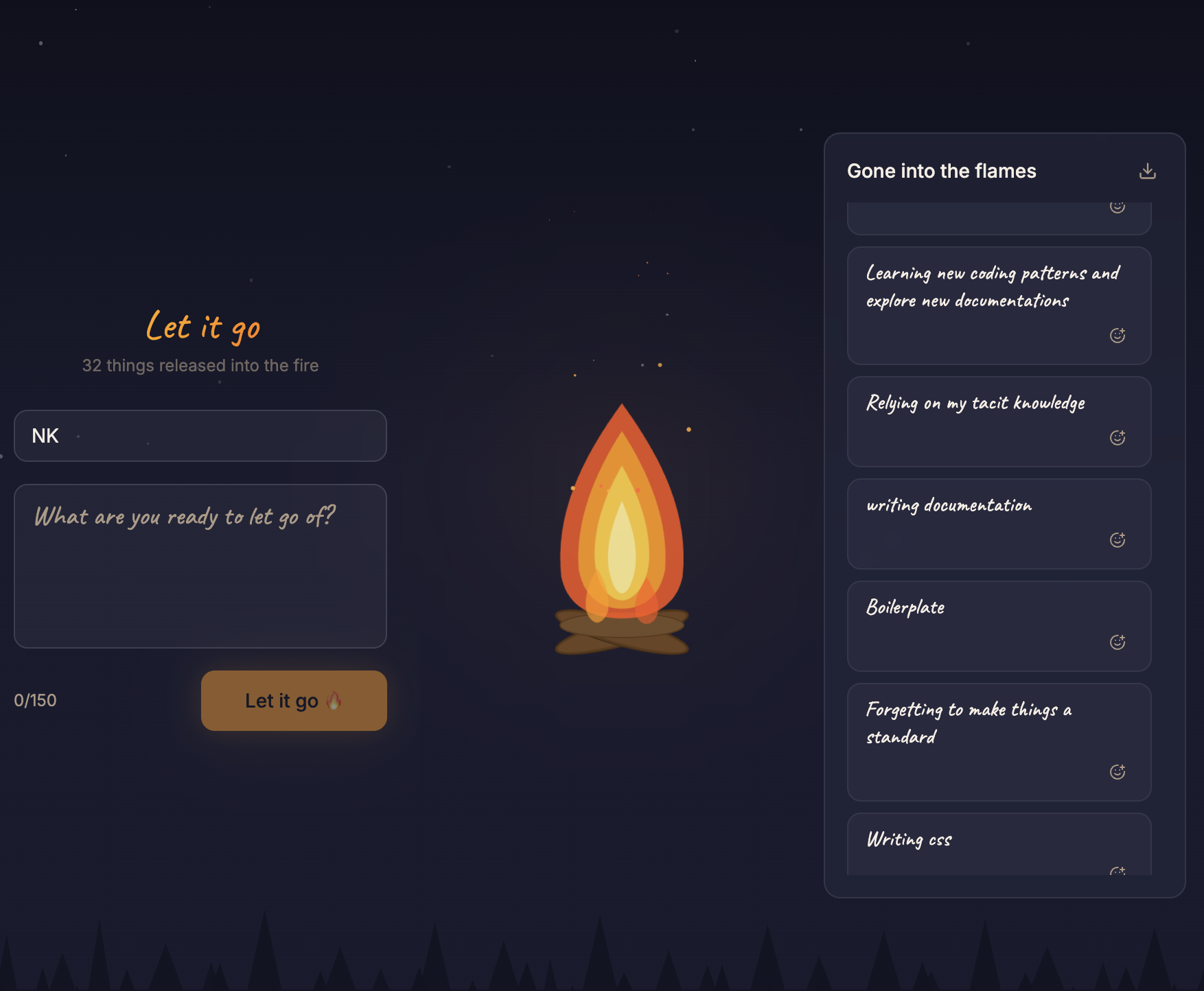
A live interactive app. A realistic campfire with ambient crackling audio. Room codes so people could join from wherever they were. When you typed your goodbye, it appeared on everyone's screen in real-time. You could see others' notes drifting into the flames. You could see people joining. The fire received what the room needed to let go of, all together, across all those time zones.
I finished it one minute before going live. Cutting it close? Sure. But that's the point.
This is what building software looks like now. An idea at 9:30, a working product at 10:00. No sprint planning. No scoping doc. No "let's revisit that next quarter." Just: the team needs this, and I can make it happen right now. That's not recklessness, that's what becomes possible when the friction of building disappears.
A Gift to the World
After the Town Hall I spent a couple of hours polishing the app. Fixing rough edges. Making it stable enough that someone else could actually use it. And then I thought, why keep it to ourselves? So I put it on letgofire.com. Free. No sign-up. Here you go, a gift from me to you. Use it as you please.
If your team is going through a transition, any kind of transition, and you need a way to mark the moment, the app is there. I also built a second version: a Chinese New Year lantern ceremony. Same idea, different metaphor. Instead of burning things, you write on a lantern and watch it rise into the sky. Both live at letgofire.com. Both free.
What the Fire Took, and What It Left
The ceremony didn't fix everything. People still struggle. The change curve is still real. There are still moments of doubt and frustration, and a ritual doesn't erase that. It just gives you permission to move through it a little differently.
But something did shift. The fire took the old rules, and it left behind permission. Permission to try things without the weight of old standards crushing the experiment. Permission to be bad at something again. To be a beginner. Learning is awkward, and that's okay.
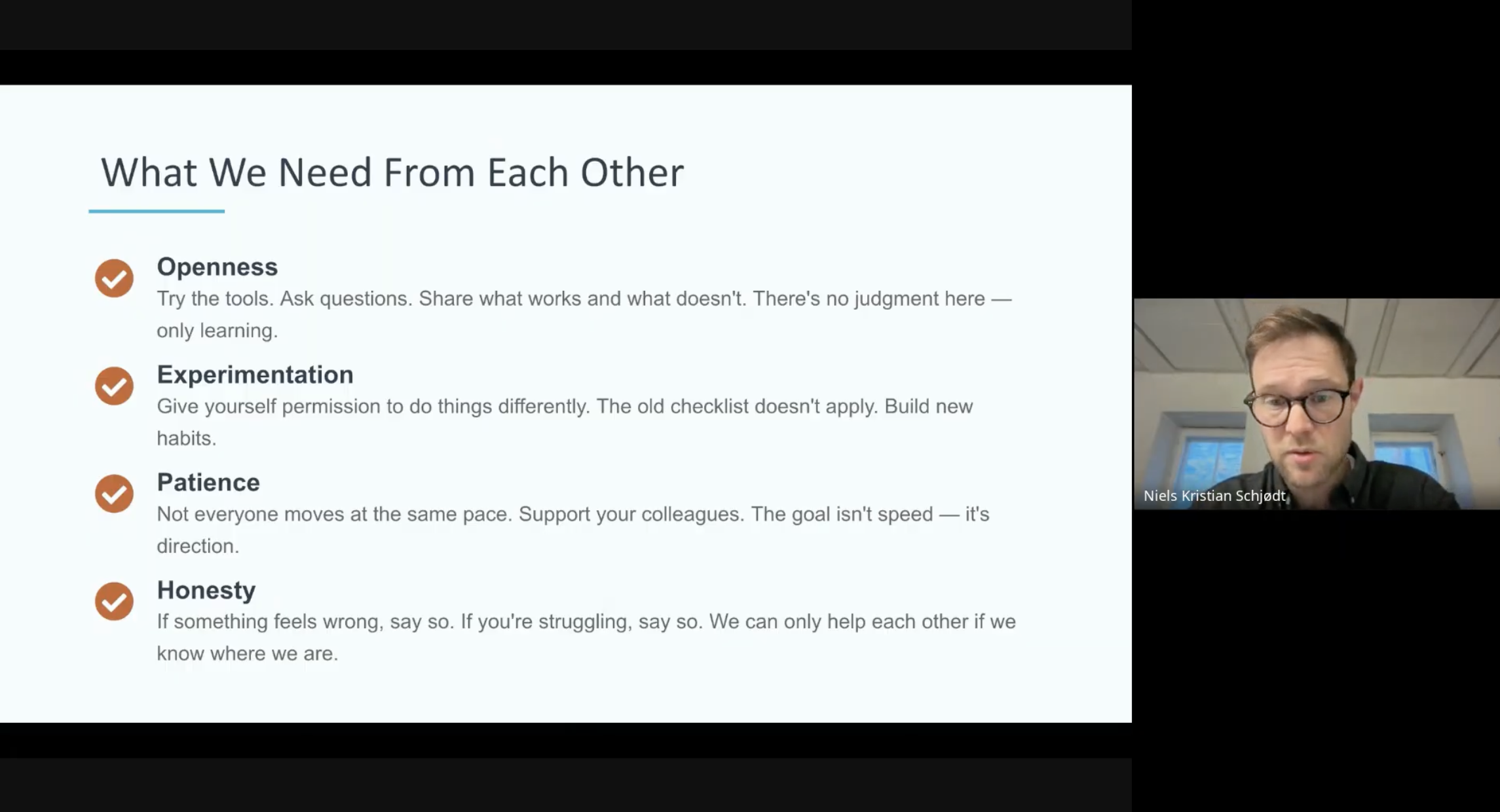
I'm grateful for this team. AutoUncle has always been a place where people embrace change, we've been through plenty of it over the years, and this is no different. It's bigger, maybe. More fundamental. But the willingness to look at something unfamiliar and say "okay, let's figure this out together", that's always been there. Getting to experience this particular shift with these particular people is something I don't take for granted.
That's what the fire ceremony gave us. Not "forget everything you knew", that's erasure, not growth. More like: honor what you learned, and let it guide you into what comes next. Even if the path looks different now. Read more about what that looks like in practice in Shifting Gears, the dos and don'ts, the habits that work, the ones that don't.